Every rule of Feetball — scoring, pitch dimensions, match format, equipment, and players. Sanctioned and maintained by the IFBF Laws Committee.
Two scoring surfaces. Three possible point values. Body part determines whether a finish counts for two or three.
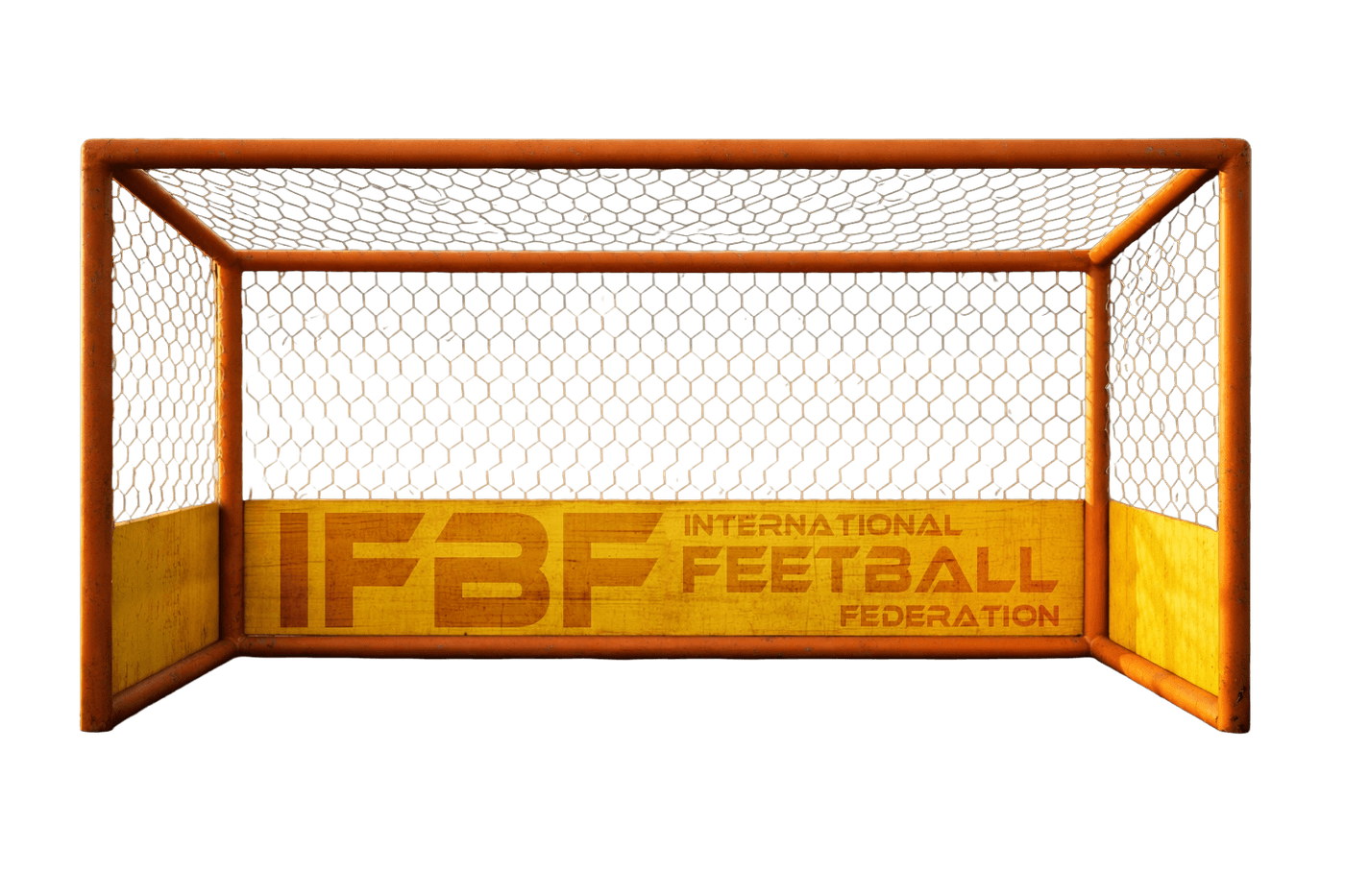
A foot-kicked ball that strikes the wooden plank along the bottom of the post. The maximum-value score in the game.
A foot-kicked ball that strikes the net of the post. Two points awarded regardless of placement within the netting.
A finish using head, chest or thigh always counts as two points — regardless of whether it strikes the net or the wooden plank.
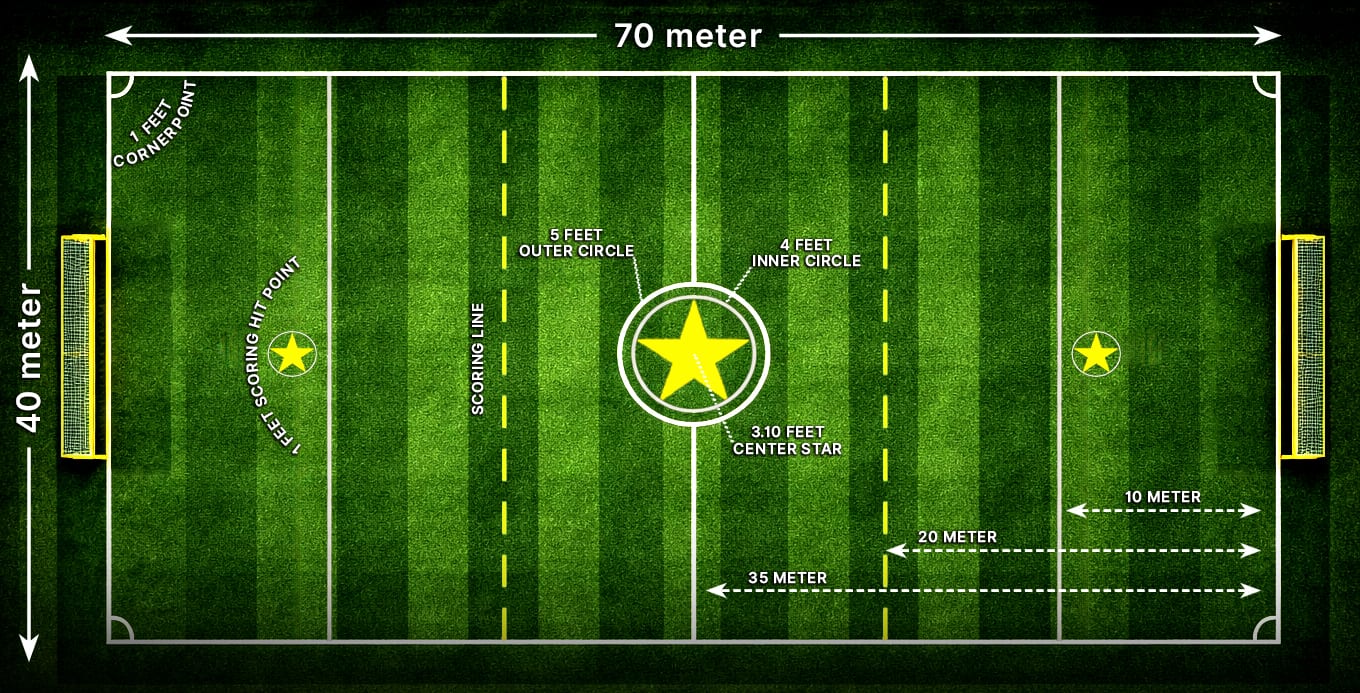
A 70 × 40 m rectangle, marked with a centre circle, half-line, two saver zones, and two scoring posts at the short ends. All grounds are IFBF-certified before fixtures begin.
Two halves of 35 minutes separated by a 10-minute interval. Total 80 minutes, plus added time at the referee's discretion.
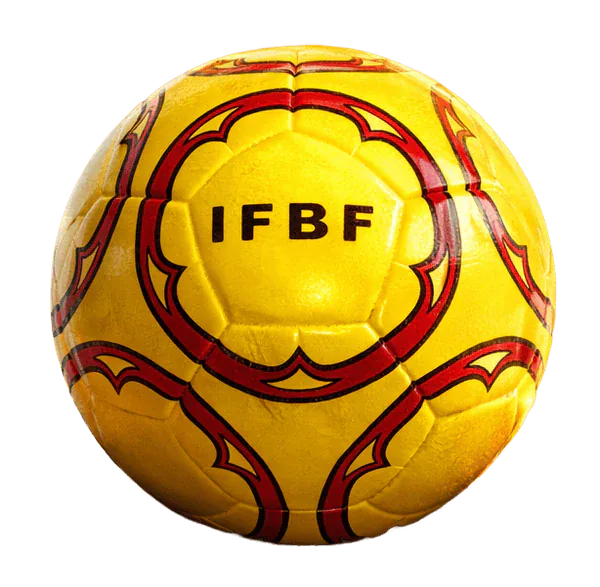
Two match balls per fixture — a white ball for the first half, a yellow for the second. Same specification, different colour for unmistakable broadcast clarity.

Identical in weight, panel count and material. Colour is the only differentiator — and it is mandatory: a half played with the wrong-colour ball is voided and replayed.
Nine on the pitch, fifteen on the roster. One saver, three defenders, three midfielders, two forwards — the standard 1-3-3-2 formation.

The IFBF is the world governing body for Feetball — custodian of the Laws of the Game and the federation that sanctions the GB Premier League. Every fixture, official and club competes under its authority.
Sole keeper and authority of the official Laws of Feetball.
Authorises the GB Premier League and international fixtures.
Sets the benchmark for pitch, equipment and officiating.
Develops Feetball across its member nations worldwide.